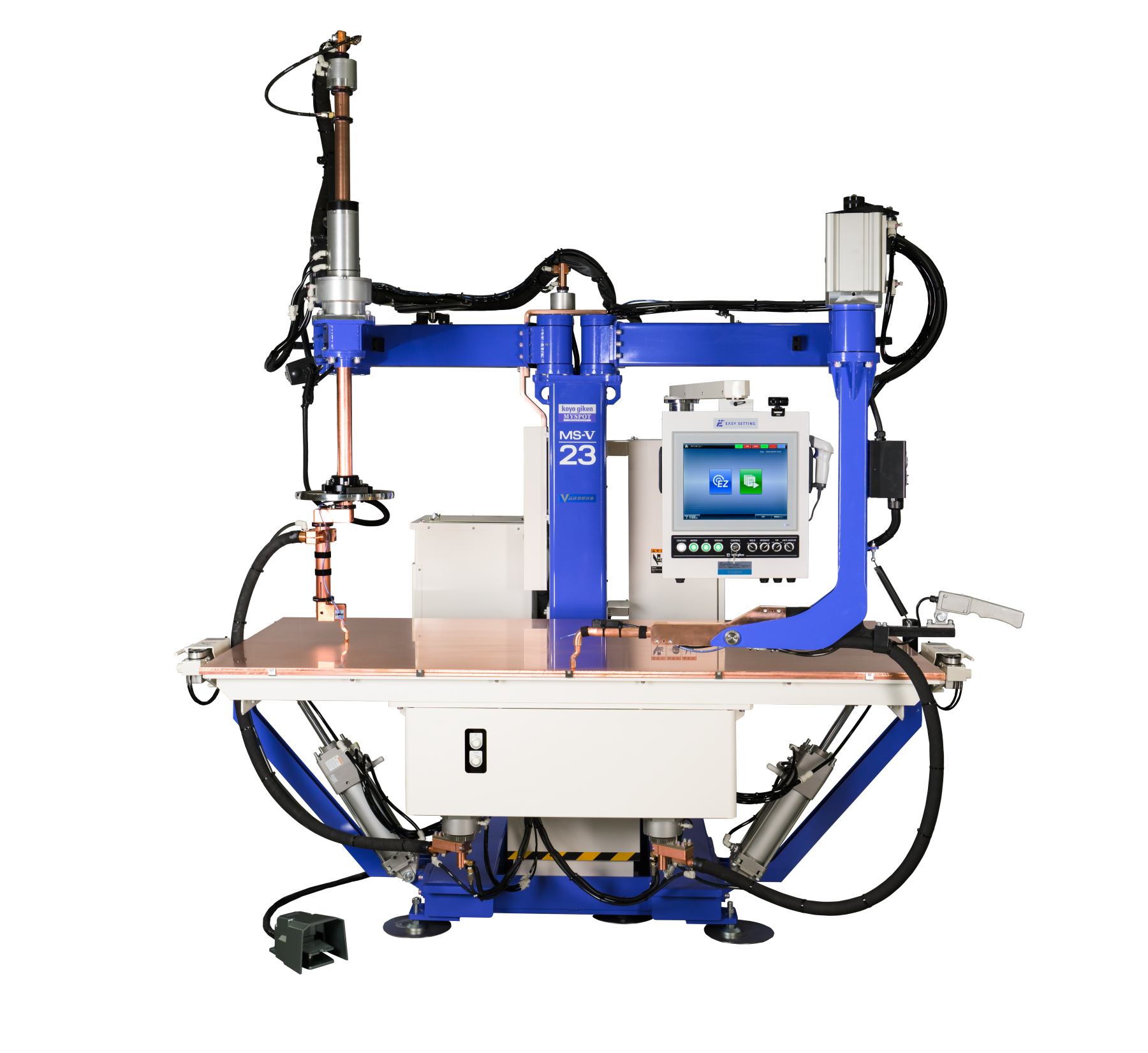

How a MySpot Welder Supports Consistency, Control, and Compliance
Medical device manufacturing places exceptional demands on joining technologies. As devices become smaller, more complex, and increasingly regulated, manufacturers must rely on processes that deliver repeatable performance, tight tolerance control, and long-term reliability. Among the available joining methods, precision resistance spot welding plays a critical role in enabling reliable medical device assembly—particularly when supported by purpose-built systems such as International Technologies’ MySpot welding platform.
Spot Welding’s Role in Medical Device Assemblies
Resistance spot welding is widely used in medical manufacturing to join thin-gauge metals without filler materials or consumables. This makes it particularly well suited for producing assemblies where cleanliness, structural integrity, and repeatability are essential. Applications include surgical instruments, implantable device subassemblies, diagnostic device components, and sensor or electrode assemblies.
Because heat is generated only at the interface between materials, spot welding minimizes thermal distortion and limits the heat-affected zone—an important factor when working with precision parts or assemblies that incorporate electronics or delicate mechanical features.
Precision and Repeatability in Regulated Environments
Medical device manufacturers must validate their processes and ensure consistent output over extended production cycles. Variability in welding can affect not only product quality, but also regulatory compliance.
Designed with regulated manufacturing in mind, the MySpot precision spot welding system emphasizes stability and repeatability through precise control of welding current, time, and force. Consistent delivery of welding parameters helps manufacturers reduce part-to-part variation and maintain process integrity across multiple shifts or facilities.
This level of control is especially important for Class II and Class III medical devices, where even small process deviations can impact performance or long-term reliability. By supporting repeatable and documented welding processes, precision systems like MySpot help manufacturers meet internal quality standards as well as external regulatory requirements.

Material Flexibility for Medical Applications
Medical device assemblies frequently involve materials such as stainless steel, nickel alloys, titanium, and other specialty metals. Each material presents its own challenges related to conductivity, surface condition, and thickness.
Precision spot welding systems such as MySpot allow manufacturers to fine-tune welding parameters to match specific material combinations and geometries. Adjustable controls enable optimization of weld strength while minimizing deformation and electrode wear, even when joining dissimilar metals.
This flexibility allows manufacturers to standardize equipment across multiple product lines while still maintaining application-specific process control.
Supporting Lean Manufacturing Strategies
As medical device manufacturers scale production, efficiency and floor space optimization become increasingly important. Compact welding systems align well with lean manufacturing initiatives by delivering high output in a small footprint.
The MySpot system is designed to integrate easily into existing production cells, supporting both manual and semi-automated workflows. Fast cycle times help reduce handling and labor requirements while maintaining consistent weld quality. When combined with inline inspection or data tracking, spot welding cells can also support traceability initiatives often required in regulated manufacturing environments.
Clean, Controlled Joining for Sensitive Devices
Cleanliness is a fundamental concern in medical manufacturing. Spot welding requires no filler materials, fluxes, or gases, reducing the risk of residue or contamination in finished assemblies. The controlled nature of the process also minimizes spatter and surface discoloration, simplifying downstream cleaning and finishing operations.
For medical devices with strict hygiene or biocompatibility requirements, a clean joining process helps preserve surface integrity and supports consistent post-weld processing.
Designing for Manufacturability
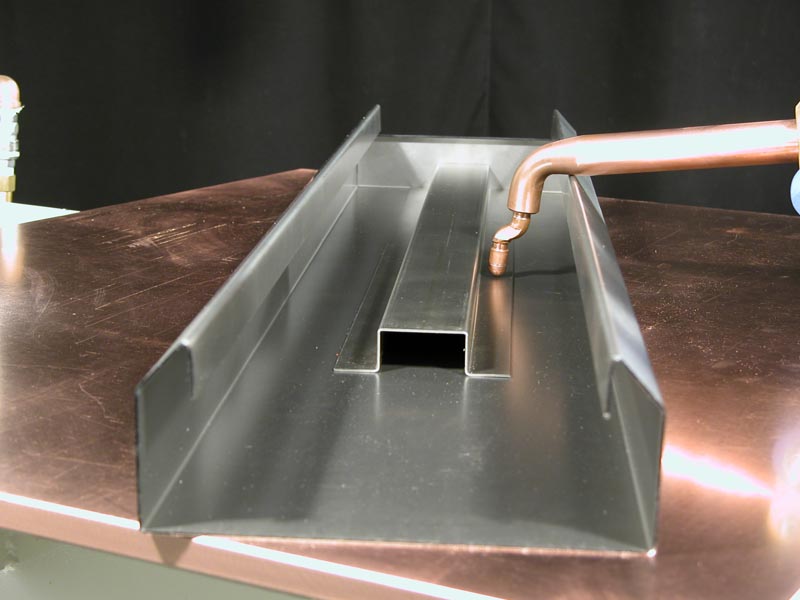
As device designers push for smaller profiles and increased functionality, collaboration between design and manufacturing teams is critical. Spot welding allows designers to specify compact assemblies without introducing fasteners or adhesives that can complicate manufacturing and validation.
By accounting for spot welding early in the design phase, manufacturers can improve manufacturability and reduce costly design revisions. Systems like MySpot provide the process consistency designers and engineers need to confidently incorporate welded joints into critical components.
Maintaining Quality Across the Product Lifecycle
Medical device production often extends over many years, with ongoing requirements for spare parts, design updates, and regulatory compliance. Maintaining consistent joining performance over time is essential to avoiding revalidation and production disruption.
Precision spot welding systems help support long-term manufacturing continuity by delivering stable, repeatable performance across the product lifecycle. This consistency allows manufacturers to focus on innovation and scalability while maintaining compliance with evolving regulatory expectations.
Precision resistance spot welding remains a cornerstone of modern medical device manufacturing. By offering controlled heat input, material flexibility, and repeatable performance, systems such as International Technologies’ MySpot help manufacturers meet the dual demands of innovation and compliance.
As medical devices continue to evolve, reliable and precise joining solutions will remain essential for producing safe, high-quality products that perform consistently from development through full-scale production.